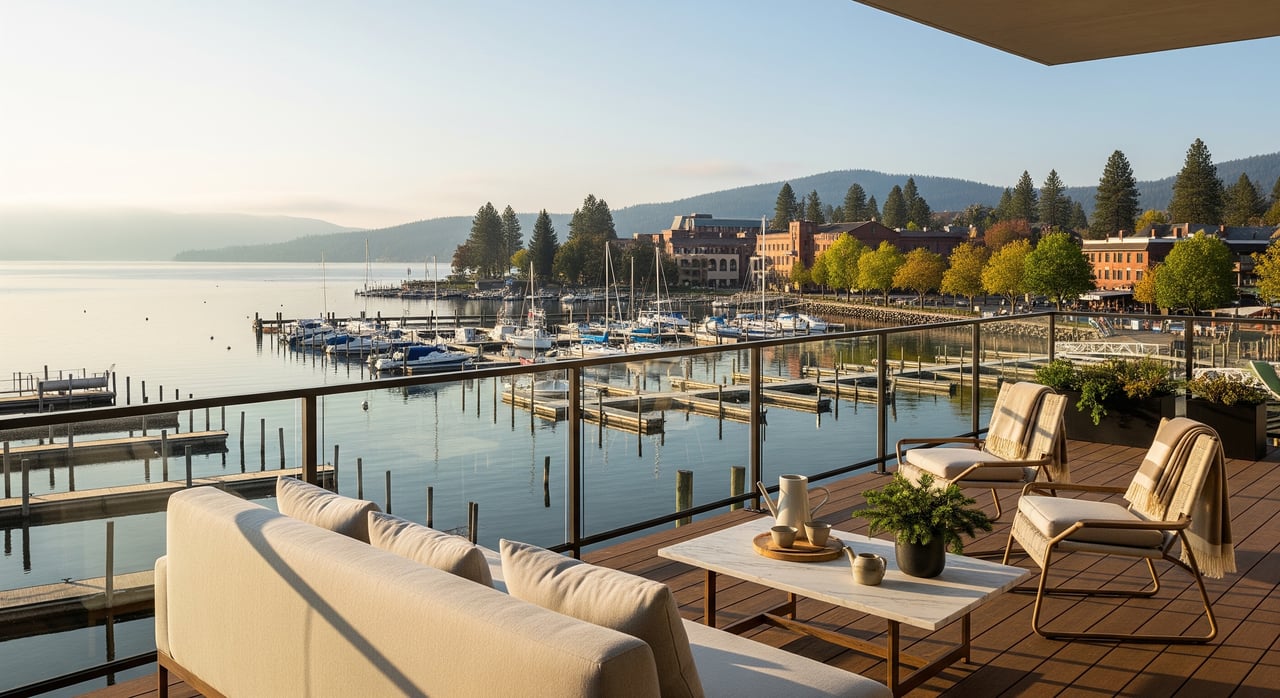
What does everyday life feel like when you live within a short drive of downtown Coeur d’Alene? If you are dreaming about mornings by the lake, easy coffee runs, and quick access to parks and trails, you are in the right place. Many residents choose this area for the small-city convenience paired with incredible access to nature. In this guide, you will learn how walkability, lake access, errands, commuting, and seasons shape your day-to-day routine. Let’s dive in.
What “near downtown” means
Downtown Coeur d’Alene centers on Sherman Avenue along the north shore of Lake Coeur d’Alene. This compact area brings together restaurants, coffee shops, boutiques, galleries, and services in a walkable core. When you live nearby, you can reach the waterfront promenade and public green spaces in just a few minutes. The practical takeaway is simple: you get small-city amenities with the lake right next door.
Walkability and daily errands
If you live in or very close to downtown, everyday stops like coffee, lunch, and a few specialty shops are often within a short walk. Evening hours are lively in summer and quieter in spring and fall, so you may find that dinner reservations are essential in peak season but optional the rest of the year. Many residents pair walking with quick drives to larger stores just beyond the core. Plan to walk for fun and food, then drive for bigger errands.
Parking tips for everyday convenience
- Expect more competition for street parking during summer weekends and event evenings.
- Keep a go-to plan for peak times, like a preferred lot or arriving a bit earlier.
- In shoulder seasons and winter, finding a space is usually easier, and the pace feels more local.
Lake, parks, and trails
Public access to Lake Coeur d’Alene is a defining feature of daily life near downtown. You can stroll the waterfront, watch boats, or launch your own on warmer days. Trails that connect to the greater area make it easy to run, bike, or walk without getting in the car. In summer, the mix of water activities and outdoor events is the heartbeat of the city. Fall brings quieter paths and beautiful colors. Winter settles into peaceful views, with many residents shifting to nearby mountain or cold-weather activities.
Groceries, care, and schools
You will find cafes and specialty food retailers in the core, with full-service grocery options a short drive away. Healthcare is accessible, with major providers and clinics located in and around Coeur d’Alene. Families have access to public and private school options, and the public school district serves addresses near downtown. Because hours and offerings can change by season, it helps to check store and clinic hours before a busy weekend.
Getting around and commuting
The Coeur d’Alene area is primarily car-oriented. Most residents drive for daily errands and trips across town. Local and regional bus services operate within Kootenai County and to nearby communities, though coverage and frequency are more limited than in larger metros. Many people walk or bike in the core during warmer months, then switch back to driving when the weather turns.
Regional travel and the airport
Spokane serves as the nearest large-city hub for air travel, jobs, and big-city amenities. Spokane International Airport is the most common choice for flights. Seasonal weather can affect drive times, especially in winter. Build in extra time and check road conditions when storms roll through.
Seasons and local rhythm
Living near downtown means you feel the seasons in your routine. Summer is vibrant, with lake activity, outdoor dining, and packed calendars. Expect busier sidewalks and restaurants, and plan ahead for parking. Spring and fall offer a calmer vibe that many residents love for everyday errands and easy reservations. Winter is quieter, and some businesses reduce hours or close for part of the season. The benefit is simple: peaceful lake views and more room to breathe.
Neighborhood feel and homes
- Immediate downtown: a mix of condos, small-lot historic homes, and some mixed-use buildings. You choose this area if walkability and dining are top priorities.
- Near-downtown residential streets: tree-lined areas with single-family homes and local parks. You get a quieter feel while staying close to the action.
- Short-drive communities in Kootenai County: more recent development, larger lots, and family-oriented amenities. You trade a slightly longer drive for space and privacy.
Each option offers a different balance of convenience, size, and lifestyle. If you are relocating, it helps to tour a few pockets to see which rhythm matches your day-to-day needs.
Day-in-the-life examples
The weekday for a remote professional
- Morning: Walk to the waterfront with coffee, then start work at home or a nearby office.
- Midday: Quick drive for a grocery restock or a workout on a nearby trail.
- Evening: Meet friends on Sherman Avenue for dinner and a short stroll by the lake.
The school-day flow for a family
- Morning: School drop-off, then errands or a park stop for the dog.
- Afternoon: Work blocks and appointments, followed by after-school activities.
- Evening: Easy dinner out or a simple home-cooked meal after a nearby grocery run.
The relaxed routine for an active retiree
- Morning: Quiet walk by the lake and a leisurely coffee.
- Midday: A trail outing or community class, then lunch in the core.
- Afternoon: Healthcare or personal appointments close to home.
- Evening: Dinner early to skip crowds during peak season.
Practical planning tips
- Check seasonal hours. Many restaurants and shops extend hours in summer and scale back in winter.
- Have a parking plan. Keep a preferred lot or street in mind for summer evenings.
- Keep a flexible commute strategy. In winter, allow extra time and monitor conditions.
- Blend walk and drive. Walk for dining and the waterfront, drive for larger errands.
- Try the shoulder seasons. Spring and fall provide a local-feel pace that many residents prefer.
How a local advisor helps
If you are moving from out of state, getting a feel for everyday life matters as much as square footage. A neighborhood walkthrough, a peek at seasonal rhythms, and clarity on parking, errands, and commute patterns will help you choose the right pocket near downtown. You can preview areas with virtual tours, compare neighborhoods that fit your priorities, and create a plan for a smooth move.
Ready to explore homes and neighborhoods near downtown Coeur d’Alene with a local guide who understands relocation, presentation, and a concierge process? Connect with Rachael Holzhauser to map out your next steps.
FAQs
How walkable is it to restaurants and the lake from a downtown condo?
- If you live in or very near the core, many dining options and the waterfront promenade are a short walk away, especially along and near Sherman Avenue.
Will I need a car to live near downtown Coeur d’Alene?
- Most residents rely on a personal vehicle for errands and commuting, with walking and biking used for short trips in the core and during warmer months.
How does summer tourism affect daily life near the lake?
- Summer brings more visitors, fuller restaurants, and busier parking, so it helps to plan reservations and build in extra time for evenings and weekends.
What should I know about commuting to Spokane and the airport?
- Spokane and its airport are common regional destinations, and winter weather can affect drive times, so check conditions and allow extra time during storms.
Do businesses change hours by season in downtown Coeur d’Alene?
- Yes, many extend hours in summer and scale back in winter, so it is wise to check hours ahead of time for dinner plans or weekend errands.