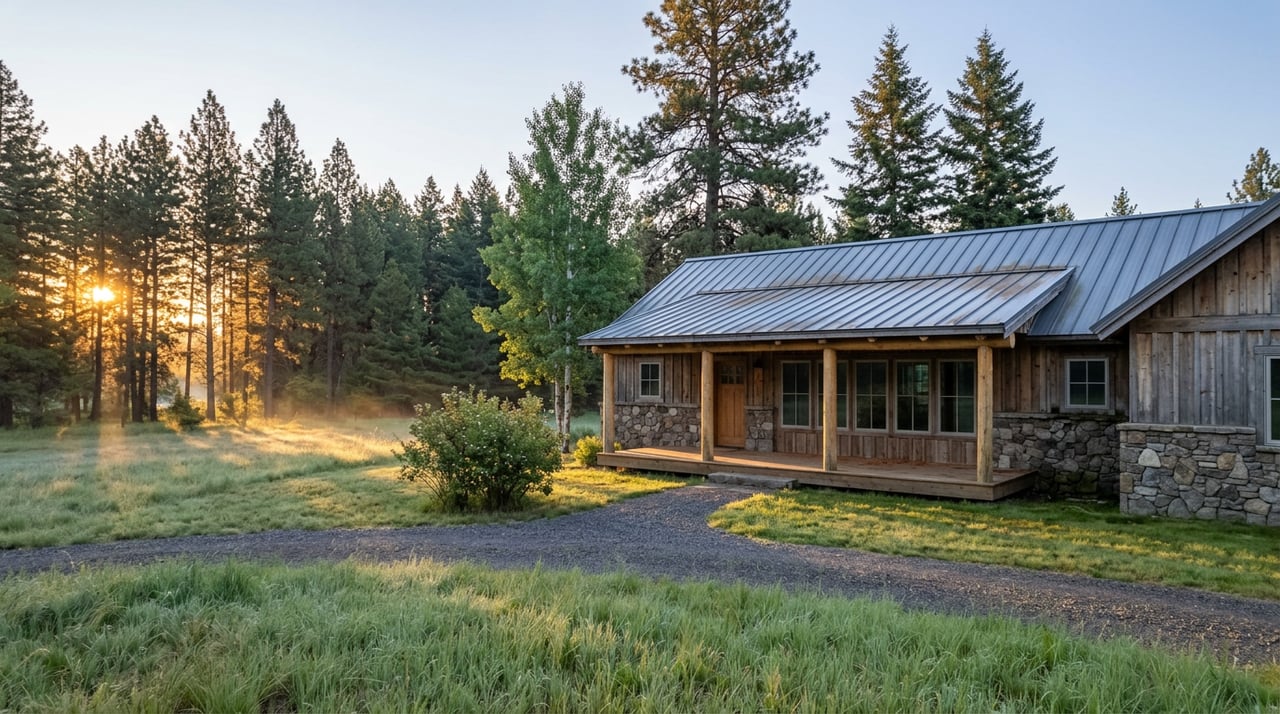
Pull up two Athol land listings side by side and the price-per-acre math will tell you they're nearly identical investments. One is a level five-acre parcel with a new well and an approved septic file. The other is five wooded acres at a similar price, no well, no septic history, and a note that says "buyer to verify." On paper, same acreage, same rough price. In practice, one of those parcels is ready to build on next spring and the other might take a year and thousands of dollars in site work before you know if you can build at all.
That gap doesn't show up in a price-per-acre chart. It comes from a single number written into Idaho water-quality rules almost fifty years ago, and it still decides what a piece of Athol ground is actually worth.
The Rule Behind Every "5 Acres" Listing
Scroll through current land listings near Athol and a pattern jumps out. Parcel after parcel is sized right around five acres, and the description leads with well output and septic status instead of square footage or view. That's not a coincidence and it's not a style choice among local sellers. It's the footprint of a 1977 rule from the Panhandle Health District that caps septic density over the Rathdrum Prairie Aquifer at one dwelling per five acres, with narrow exceptions for lots platted before December 20, 1977, or parcels inside an approved municipal sewer area.
The aquifer underneath Athol and much of Kootenai County is the region's only realistic drinking water source, and the U.S. Environmental Protection Agency designated it a sole-source aquifer back in 1978, one of the first in the country. That designation is why the five-acre septic rule exists in the first place: pack septic drainfields too close together over fast-moving gravel aquifer material and you risk contaminating the same groundwater the whole county drinks from. The rule briefly wobbled a few years ago when the health district's rulemaking authority came into question. Kootenai County responded with an emergency ordinance on March 22, 2022, that preserved the five-acre standard, then began the longer process of writing it permanently into county zoning code rather than leaving it dependent on a temporary measure.
For a buyer, this means the acreage number on a listing is really a legal test. Five acres outside city limits, on a lot created after 1977, generally clears the septic bar. Anything smaller has to prove it was platted before that date or connects to municipal sewer, or it may not perc at all. That's the difference between a buildable homesite and a parcel you can only use for storage or recreation.
Why the Per-Acre Price Already Disagrees With Itself
Land aggregators currently put the average asking price for Athol acreage at roughly $91,943 per acre, well above the countywide figure of about $54,700 per acre reported for Kootenai County this past June. That gap alone tells you something: Athol's number is being pulled upward by small, view-heavy, lake-adjacent parcels, the same way a handful of waterfront sales can drag a neighborhood median away from what a typical buyer actually pays. A raw per-acre average blends a half-acre lakefront lot with a flat, unremarkable ten-acre timber parcel and reports back one misleading blended number.
Layer the septic rule on top of that and the price-per-acre figure gets even less useful. A five-acre parcel with a proven well and an approved septic file is a different product than a five-acre parcel that still needs a site evaluation, a test hole dug to eight feet, and a driller on contract. Both might list at the same price per acre. Only one of them is a known cost.
What "Ready to Build" Actually Looks Like on the Ground
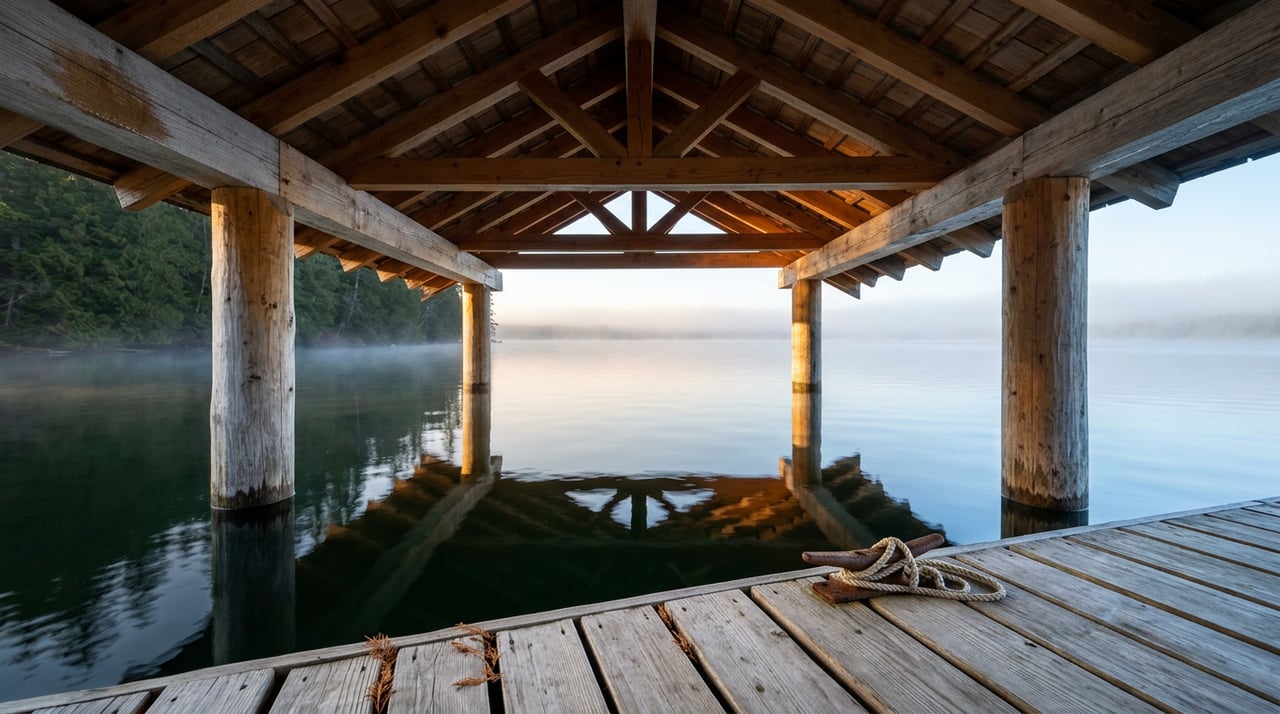
Current listings around Athol make the contrast visible if you know what to look for. Revelstoke Ranch, a newer subdivision of twenty level lots, advertises water, natural gas, and electricity already run to each parcel, a build-ready package that removes most of the guesswork. Cape Horn Estates and Fish Creek Estates go further, listing engineered and approved septic plus paid community water hookups, meaning a buyer there is close to pulling a building permit rather than starting due diligence from zero. Broken Arrow Estates instead sells on a different kind of readiness: a private road, a well already pumping more than 30 gallons per minute, and a 400-amp electrical service, the infrastructure a buyer would otherwise have to install themselves. Kelso Lake Estates bundles acreage with shared lake frontage and dock access, an amenity that raises value in a way no septic file can.
None of that shows up in a per-acre number. It shows up in the listing paragraph, and it's the reason serious acreage shoppers in this market read the utility notes before they read the price.
The County Isn't Loosening This, It's Watching It Closer
At an Aug. 26, 2025 meeting of the Kootenai County Board of Commissioners, Panhandle Health District director Eric Kettner reported that septic permitting, aquifer-protection reviews, and building-permit collaboration with the county all grew through fiscal 2025, describing more than 1,500 building-permit reviews and over 1,200 facilities examined as part of aquifer-protection work. Commissioner Marc Eberlein pressed him on how the district squares that growth with the aquifer's limits, asking how the county avoids "growth spurts that far outpace" its infrastructure. Kettner's answer was that the district is holding the line on existing septic rules while working toward what he called the "best available technology" for containment.
That exchange matters for a buyer weighing acreage right now. It tells you the five-acre rule isn't a relic on its way out. It's an active constraint that county staff and commissioners were still negotiating a year ago, and the commissioners approved the county's fiscal 2026 budget days later, including funding for the Aquifer Protection District. Every parcel inside the aquifer boundary also carries a small annual protection fee, currently $5.74 per parcel, a minor cost but a signal that the county treats every lot over this water source as part of an ongoing management program, not a one-time approval.
A Short Due-Diligence List Before You Write an Offer
Before an offer goes in on Athol acreage, a few documents are worth more than any per-acre comparison:
| Document | What it tells you |
|---|---|
| Panhandle Health District septic file | Whether a system is already approved, and for what size and location |
| Lot-creation date (county recorder) | Whether the parcel predates the Dec. 20, 1977 cutoff and may qualify under a smaller footprint |
| Well log | Depth, casing, and yield, so you know what you're actually buying before drilling a new one |
| Recorded road maintenance agreement | Who plows and maintains a private road, and what your share of the cost is |
| City limits vs. county jurisdiction | Which water and sewer path applies, and which permitting office you'll deal with |
Pulling these before an offer, rather than during inspection, is the difference between negotiating from a position of knowledge and finding out mid-contract that a parcel needs a full site evaluation before anyone can say whether it's buildable.
A Few Questions Worth Asking Before You Tour
Does five acres automatically mean I can install a septic system? Not automatically. It clears the density threshold outside city limits, but the parcel still needs a site evaluation and test hole to confirm the soil will support a drainfield, and any wet areas, springs, or nearby wells can still disqualify a spot.
What if the lot I'm considering is smaller than five acres? Ask when the lot was legally created. Parcels platted before December 20, 1977, or those inside an approved sewer service area, can sometimes qualify under the exception, but this needs to be confirmed with the health district, not assumed from the listing.
Does this rule affect homes that are already built? Existing systems are grandfathered under the permit that was issued at the time, but any expansion, replacement, or new construction on the same parcel typically has to meet current standards, which is worth checking before you plan an addition.
Acreage in North Idaho rewards buyers who read past the price. If you're comparing Athol parcels and want a second set of eyes on well logs, septic files, or a subdivision's utility package before you make an offer, ComeHomeNorthIdaho is a good place to start. Schedule a free consultation and we'll walk through the specific parcels you're considering together.